Insights
CIO Insights: The AI Deployer’s Inheritance Problem
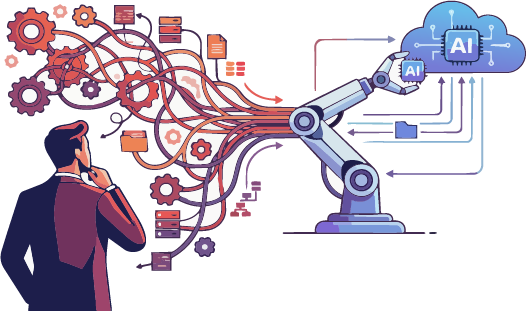
As artificial intelligence becomes embedded in enterprise software, most CIOs are no longer choosing AI systems so much as inheriting them through vendor updates, SaaS platforms, and employee-adopted tools.
In the latest entry of his “CIO Insights” series, Evolver CIO Ryan Haylock argues that the central challenge of AI governance is shifting from model development to deployment oversight, requiring CIOs to focus on contracts, access controls, and accountability as regulatory expectations accelerate in the United States and Europe.
In the spring of 2026, Anthropic released Claude Mythos Preview, a frontier model the company itself describes as a “step change,” gated through a program called Glasswing because Anthropic is concerned its cybersecurity capabilities are too powerful for general release. Soon afterwards, OpenAI announced GPT-5.4-Cyber, a variant with its refusal boundary deliberately lowered for vetted defenders, including binary reverse-engineering capabilities that used to require a specialized team and a subpoena. Both landed inside a two-week window that also included a NIST draft concept note for a new AI Risk Management Framework Profile on Trustworthy AI in Critical Infrastructure (April 7) and the steady tick toward the EU AI Act’s August 2, 2026 compliance deadline for high-risk systems.
Almost every AI governance article published since those releases has been written from the builder’s perspective – what it means to train responsibly, document thoroughly, red-team rigorously. That is not the perspective most enterprise CIOs actually occupy. The enterprise CIO’s job in the AI era is not to build models. It is to govern the models, agents, and AI-enabled features that arrive in their environment through someone else’s product – enterprise tiers of hosted models, AI embedded in Adobe and DocuSign and Salesforce and the long tail of SaaS, agents and copilots sitting inside tools employees already have licenses for. That is a fundamentally different problem, and it is the one almost no one is writing about directly.
This is the second piece in a series I began with CMMC, and it extends the same premise: the executive signature is the product. The difference with AI governance is that what the CIO is signing for has often arrived in the organization without the CIO having chosen it. That reality is why many enterprises are further behind than they realize.
The Brussels Effect is coming faster than the preemption fight
On December 11, 2025, the Trump administration issued an executive order titled Ensuring a National Policy Framework for Artificial Intelligence, directing federal agencies to challenge state AI laws the administration views as overly burdensome – specifically naming Colorado’s algorithmic-discrimination law (effective June 2026), California’s Transparency in Frontier AI Act (January 2026), and Texas’s Responsible AI Governance Act (January 2026) as targets. An AI Litigation Task Force is now active. The FTC was directed to opine by March 11 on whether state-mandated bias mitigation constitutes a deceptive trade practice. In short, the US federal stance is deregulatory and explicitly preemptive of state action.
Meanwhile, the EU AI Act’s high-risk obligations come into force on August 2, 2026. Articles 6 and 8 are the ones CIOs should read first. Article 6 defines what counts as a “high-risk” AI system — either systems operating as safety components under existing EU product legislation (medical devices, vehicles, machinery), or systems operating in eight Annex III domains including biometrics, critical infrastructure, education, employment, access to essential services, law enforcement, migration, and the administration of justice. Article 8 is the compliance obligation — it opens the chain of requirements that follow in Articles 9 through 15: risk management, data governance, technical documentation, record-keeping, transparency, human oversight, and accuracy/robustness/cybersecurity.
Here is the quiet part. The Brussels Effect – Anu Bradford’s 2020 thesis that EU regulation becomes the de facto global standard through multinational compliance rationalization – works even faster when the alternative is an active federal deregulatory push and a patchwork of contested state laws. Every US enterprise I have worked with through GDPR applied GDPR-grade controls globally because operating two regimes was more expensive than operating one. The same logic will apply to the EU AI Act, and it will apply before the preemption litigation resolves. The EU framework is becoming the effective floor for US enterprise AI governance. The question for a CIO is not whether that is desirable. It is whether the organization is positioned to meet it – and whether the tools that will carry that obligation are ones the CIO actually chose or ones that arrived embedded in something else.
Provider or deployer? Why most CIOs have been answering the wrong question.
The EU AI Act draws a sharp and consequential line between providers (who build, train, or substantially modify AI systems) and deployers (who use AI systems under their authority in the course of business). Article 26 governs deployer obligations specifically. They are narrower than provider obligations but they are real, enforceable, and arriving on the same August 2, 2026 timeline. NIST AI RMF makes the same distinction less formally through its actor roles. Most US state AI laws either mirror the distinction directly or collapse to it in practice.
Most enterprises are deployers, not builders. They do not train models, do not run models on servers they own, and do not ship a model-as-product to customers. They subscribe to enterprise tiers of hosted foundation models, maybe they use a governance platform to allow-list and block-list AI tools and embedded AI features, and they govern employee use of AI through policy and technical control. That is a deployer posture, and it is the posture most CIOs actually occupy.
The industry discourse does not reflect this. Most AI governance writing is about model cards and evaluation suites and responsible training – artifacts that belong to the provider. The deployer’s actual problem is different in kind. It is not: how do we build a safe model. It is: how do we govern a growing portfolio of AI capabilities that arrive in our environment through contracts, SaaS updates, and employee-initiated signup flows, many of which we did not explicitly procure as AI. Framing determines attention and the industry framing has misallocated the attention of enterprise CIOs for most of the last eighteen months.
The inheritance problem
AI capability is now inherited, not acquired. Consider the mechanism. A finance team signs a renewal for a SaaS contract they have held for five years. The vendor ships an AI feature release the following quarter. That feature is now in production in an enterprise environment, under the original contract, with terms that may or may not have been updated to reflect the new capability. The CIO did not procure it. The CISO did not review it. The board has never heard of it, yet it is in production.
Extend the pattern. A customer-success team adopts a workflow tool with embedded summarization. HR turns on a candidate-screening feature that sits behind a third-party applicant tracking system. A sales rep uses a browser extension that produces meeting notes. A developer pastes a code snippet into a public model and gets a refactored version back. Every one of those is an AI deployment. None of them went through the procurement and governance review that the organization requires for a material software purchase. By mid-2026, the inherited AI surface area is larger than the deliberately procured one for most enterprises I talk to.
This is the structural problem. The enterprise is accumulating AI exposure faster than the governance function can inventory, classify, and control it. The standard builder-framed advice – document your training data, evaluate your models – does not touch it. The tools that do touch it – enterprise AI governance platforms, allow-lists and block-lists, data loss prevention with AI-specific classifiers, vendor risk management with AI-specific clauses – are the actual center of the deployer CIO’s governance stack. Almost none of the industry writing treats them as the center. They treat them as the periphery of a builder-centric story.
What the April releases actually change for deployers
There are three implications worth naming directly:
The shadow AI problem just became worse by a step function. Frontier-grade cyber capabilities – binary reverse-engineering, multi-step vulnerability analysis – are now reachable by any vetted defender. For legitimate security work that is a gain. For governance it is a problem: the line between “productivity AI” and “capability that belongs under export-control-style review” is now blurry enough that the default posture for employee-accessible AI should be restrictive rather than permissive. Treat any employee-accessible AI as Annex III-adjacent for risk-management purposes until you can prove otherwise. For deployer-only shops, this is an allow-list discipline before it is anything else.
Provider concentration risk is now a governance-relevant exposure, not just a procurement-relevant one. An OpenAI policy change, an Anthropic availability event, an Adobe AI feature sunset all land on a deployer’s enterprise environment with less cushion than they would on an organization that builds its own models. When I mentioned concentration risk in the past, I was talking about vendor SLAs. When I mention it today in an AI governance context, I am talking about material operational exposure that a board audit committee should understand as such. Providers are infrastructure, and infrastructure risk belongs on the governance agenda.
The existential question specifically for cybersecurity firms, and for integrators generally, cuts in the opposite direction to the hype cycle. Gated, governed, restricted-access cybersecurity AI increases the value of the integrator, because someone has to own the deployment, the scope, the evidence trail, the incident response, and the affirmation that the model was used appropriately. Models that are too dangerous for general release are, by definition, models that require a governance wrapper. The same logic applies at the enterprise level: the capability frontier is moving faster than any single organization can chase, which is precisely why the CIO’s job is governance architecture rather than AI engineering.
The CIO’s actual job in the deployer era
I have been in CIO seats long enough to notice a pattern. Every regulated-technology transition I have lived through – HIPAA and HITECH in elder care, SOX maturation, FERPA controls in higher ed, ITAR-adjacent controls in manufacturing – eventually collapsed onto the same three disciplines. Contract discipline. The terms under which the capability enters the enterprise, and the ability to see them, change them, and hold a counterparty to them. Allow-list discipline. The ability to say yes or no to tools at the level of granularity the risk actually sits at – not just “generative AI yes or no,” but “this feature, in this context, for this use case, under these terms.” Attestation discipline. A named human who signs, on current evidence, for the governance posture of each material use case, with an escalation path if they hesitate.
For a deployer, these three disciplines are the job. Not training data selection. Not model evaluation. Not fine-tuning governance. Discipline in contract, allow-list, and attestation must be the focus and must be done well, while updated on a cadence shorter than the rate at which the provider ecosystem changes under you.
I have seen the same three disciplines emerge under every regulatory regime I have worked in. AI is not an exception. It is the same pattern, applied to a capability surface that is growing faster than any prior one. The organizations that were good at compliance were not always the ones with the best technology. They were the ones with the tightest grip on the three disciplines. That is the bet I am making for AI.
What’s actually on the clock?
Mythos arrived April 8th. GPT-5.4-Cyber arrived April 14th. August 2 for the EU AI Act is just around the corner. Colorado’s consequential-AI law goes live six weeks after that. Between now and the end of the year, every enterprise deployer will inherit more AI capability than they explicitly procure – and that gap will be the surface area that regulators, plaintiffs, and boards eventually ask about.
The builder-framed conversation about AI governance is not wrong. It is just not the conversation most CIOs need to have. The deployer’s problem is structural, growing, and largely invisible to the board until an incident or impending requirement brings it into focus. Contract, allow-list, and attestation – that is the job. The CIOs who recognize that early will be the ones who are not surprised by what they inherited.
Ryan Haylock is Chief Information Officer at Evolver, a federal technology and cybersecurity firm. He has led IT and security organizations across commercial, private-equity-backed, higher education, manufacturing, and elder-care enterprises. The previous article in this series discussed the Affirmation-Ready Operating Model for CMMC. He welcomes notes from IT Leaders and board directors navigating the same questions. Ryan shares additional insights on modern CIO leadership and directives on his LinkedIn profile.
About Evolver
Evolver, headquartered in Reston, Virginia, is a technology company serving government and commercial customers by addressing client challenges in the present and transitioning clients to the future through innovative IT transformation and cybersecurity services and solutions.
Founded in 2000, Evolver delivers mission-driven services and solutions that improve security, promote innovation, and maximize operational efficiency. For more information, visit us at www.evolverinc.com or on LinkedIn.